
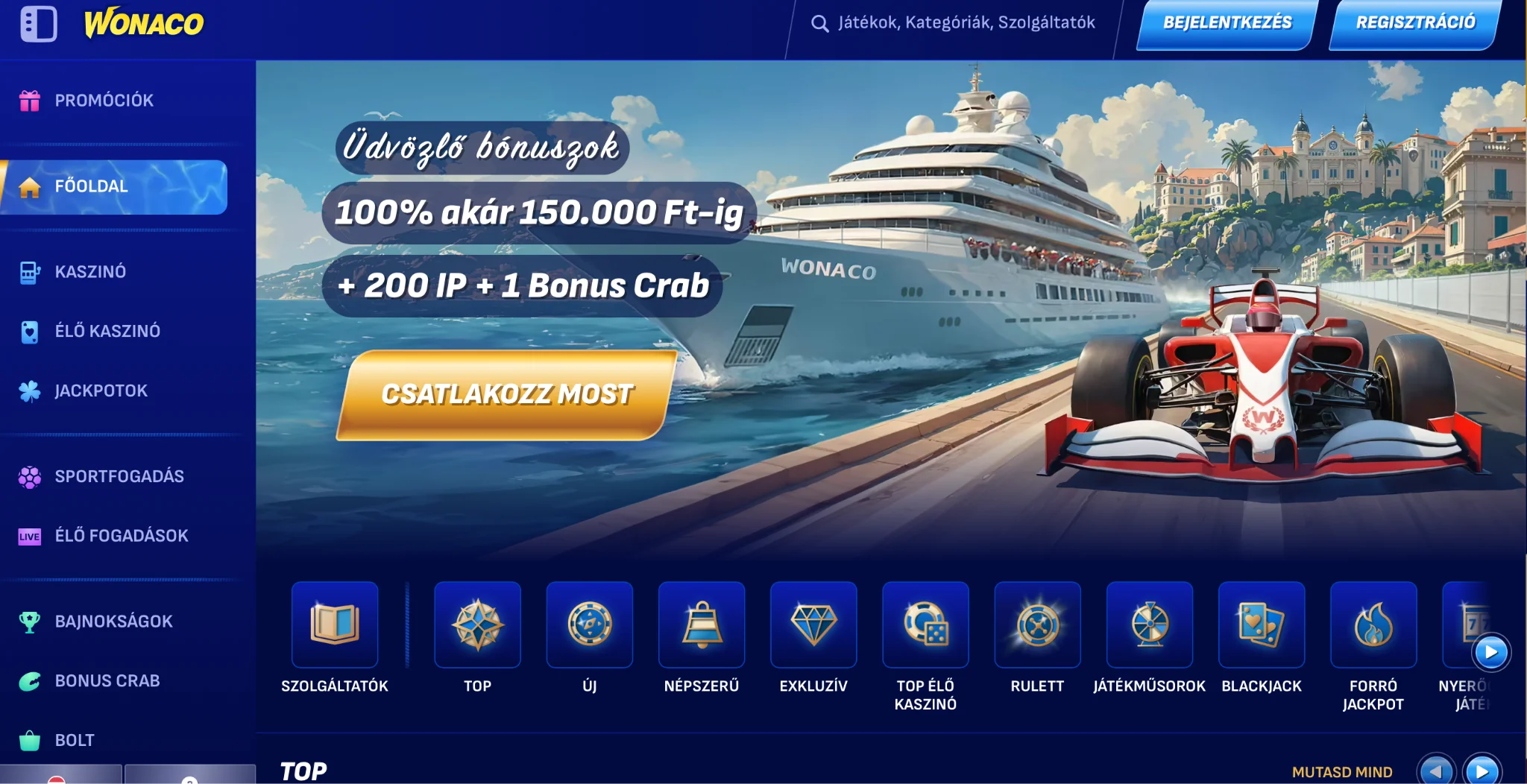
The online casino scene in the United Kingdom is humming, and a clear demand has emerged wonacoocasino.com. Players seek a local experience. Whether someone logs on from London, Manchester, Cardiff, or Glasgow, they anticipate a platform that feels as straightforward and familiar as their local high street. This is what makes Wonaco Casino’s language expansion such a smart play. It connects with the actual, multicultural makeup of Britain today. This isn’t just swapping out words on a menu. It’s about interacting with players in the language they use mentally, building trust through cultural understanding, and removing a major barrier to straightforward fun. For a savvy UK market that cherishes clarity and a tailored touch, this move makes sense. By weaving multiple language options directly into its UK platform, Wonaco is delivering a message about inclusion and putting the customer first.
The whole idea stems from a simple demographic truth about the UK. English might be the main language, but millions of residents use another language at home. Add to that the constant flow of international students, professionals, and visitors, and you have an iGaming audience that’s incredibly varied linguistically. A platform that acknowledges this does more than just appeal to more people. It shows respect. To me, this demonstrates Wonaco’s intent to serve the individual at the keyboard, not some generic idea of a « UK player ». It’s a shift away from a blanket approach and toward personal engagement. The result is that vital information on terms, bonuses, and responsible gaming gets grasped completely, creating a safer and more enjoyable space for everyone.
Britain’s Multilingual Gaming Landscape

Understanding the reason Wonaco’s move carries weight needs a examination at the UK’s particular linguistic fabric. Britain is not a one-language country. English dominates, but the historical standing of Welsh in Wales and Gaelic in Scotland enjoys formal recognition. Then you encounter the communities from across Europe, South Asia, and elsewhere. Their influence has shaped a daily reality of multilingualism. In cities including London, Birmingham, and Leeds, encountering several languages on a quick trip to the shops is normal. This diversity spills directly into online leisure. A player may use English flawlessly at work but choose to unwind and examine detailed bonus rules or live dealer chat in their first language. They proceed for total clarity and comfort.
From a business perspective, catering to this multilingual reality is now a standard demand, not a niche extra. Other industries including banking and retail have provided multi-language support for years. It’s reasonable for iGaming, a sector built on trust and precise understanding, to catch up. I’ve recognized that players who get support and information in their native tongue tend to stick around longer and engage more deeply. They become acknowledged. For Wonaco, incorporating major European languages to its core UK service matches perfectly with the country’s domestic diversity and its role as a global hub. It serves long-term residents who maintain their linguistic heritage alive, as well as the large transient population that brings to the economy.
Tearing Down Walls: More Than Just Translation
Introducing new languages is significantly more involved than using translation software. What Wonaco is apparently doing is true localisation. This entails customising content culturally so idioms, humor, and references resonate properly for the intended audience. A marketing line that performs well in English might confuse or bore the audience if converted literally into Polish or German. I’ve watched platforms fail by failing to localise currency formats or by choosing imagery that clashes with the culture. A robust localisation approach addresses these details, maintaining the brand’s voice consistent and attractive across all language versions. The goal is to build experiences that feel comparable, not perfectly alike. That requires genuine investment in copywriters and consultants who are native language speakers.
This work is most important for the core of any online casino: its terms and conditions, bonus terms, and responsible gambling tools. Confusion here can lead to annoyance, arguments, and actual harm. By providing these important documents in a player’s mother tongue, Wonaco is boosting consumer protection from the beginning. It lets players to make decisions about their gameplay and funds with complete understanding. From a regulatory perspective, this matches perfectly with the UK Gambling Commission’s concentration on clarity and fair treatment. I see this as a significant step in minimizing risk for the player. It transforms the dense legal language around sign-up offers into clear, useful information. That establishes a base of confidence, something priceless in a competitive industry.
Technical Setup and Easy Access
From a practical standpoint, putting a multi-language interface on a platform like Wonaco Casino needs solid technical groundwork. The language selector has to be obvious and easy to find, allowing users switch without a second thought. Once picked, the site should store that preference through cookies or account settings, creating a persistent, personalised visit. I’ve tried platforms where the translation only works on the main page, then falls apart inside a game or at the cashier. It’s a disjointed experience that ruins the whole point. A smooth implementation means translating thousands of text strings, game titles where possible, and making sure live chat support is actually there in the promised languages. This backend effort, invisible to players, is what distinguishes a half-hearted gesture from a real commitment.
Cultural Nuance in Customer Support
The greatest test of this expansion probably lies in customer support. Having website text in Spanish is a start. Delivering live chat or phone support with agents who speak Spanish fluently and grasp the cultural context of questions is a completely different challenge. Good support often hinges on subtlety and empathy, qualities that vanish if agents are stuck reading scripts in a second language. For Wonaco to pull this off, its investment must reach to hiring and training a support team that can manage delicate issues in each supported language. This builds tremendous goodwill. A player facing a technical glitch or a slow withdrawal will feel much calmer if they can explain their issue comfortably and be fully understood, without any added friction.
Core Languages in Focus for the British Market

Wonaco Casino’s exact language lineup will correspond to its own analysis of the UK market, but we can pinpoint several that carry strong strategic weight. Polish is a frontrunner, thanks to the sizeable, established Polish community in the UK. This group is woven into the social and economic fabric, is generally tech-savvy, and has purchasing power, making it a prime audience for online entertainment. Next, major European languages like German, Spanish, French, and Italian are vital. These serve both nationals from those countries living in the UK and the constant stream of tourists and business travellers, especially around London and the South East, who search for familiar entertainment while visiting.
Languages from the Indian subcontinent, such as Punjabi, Urdu, or Bengali, also represent a real opportunity given the UK’s large South Asian diaspora. While this might be a next-phase project for many operators, the potential for deep community connection is immense. Including these languages, even just for key support pages, would be a strong signal of inclusion. For Wonaco, deciding on which languages to launch first means examining player data, where people live in the UK, and market goals. It’s a delicate balance between wide appeal and what’s manageable to run. Launching with a core of four to six major European languages, Polish included, gives broad coverage and lets them ensure quality before possibly moving into more linguistically distinct areas.
Effect on Customer Acquisition and Retention
The commercial argument for this language expansion is strong. For drawing in new players, a multilingual platform shows up in more search results, both free and paid. A potential player in the UK searching for casino details in Polish will almost certainly click on and trust a result that clearly offers a Polish-language site. This provides Wonaco an upper hand in a competitive market, letting it capture audience segments that English-only competitors might ignore completely. It shifts the casino from a standard choice into a favored spot for specific communities, using word-of-mouth and cultural ties as strong marketing tools.
The result on keeping players is even clearer. Minimizing confusion and enhancing understanding directly raises satisfaction. When players can go through rules, get bonuses, and resolve problems without language stress, they are more likely to come back. This counts double for complex areas like live casino, where interaction and game rules are continually in play. A player who can appreciate a live blackjack game with a dealer whose chat they understand completely is having a better experience. That creates an emotional link and loyalty. In my view, retention metrics like deposit frequency, session length, and lifetime value should improve among users who engage with the platform in their native language. The barrier to full enjoyment gets systematically taken down.
Safe Betting in a Multilingual Context
With this development comes increased responsibility. The UK Gambling Commission demands plain, available responsible gambling tools and messages. Offering these resources in various languages isn’t just a bonus feature. It’s an professional duty. Players need to grasp deposit limits, time-out steps, and self-exclusion options in the language they speak best to employ them properly. So Wonaco’s commitment must ensure that all safer gambling communications, including pop-up warnings, reality check alerts, and links to groups like GamCare, are completely localised. This indicates a proactive duty of care that goes beyond just marking a regulatory box.
Also, training for customer support agents must to cover how to identify potential problem gambling behaviours across various cultures and how to gently point players toward appropriate, language-specific help. The aim is to build a safety net as inclusive as the entertainment on offer. To me, a casino that leads multilingual responsible gambling tools positions itself as a mature and trustworthy operator. It admits that player protection is the cornerstone for any sustainable business, and that this protection only works if everyone can understand it. This approach can really boost the brand’s standing with both regulators and the public.
Rival Assessment: Who Else are Communicating in Your Language?
The UK online casino market is a tough fight, with large operators always competing for players. While many large, international operators offer multiple languages on their global sites, deliberately tailoring a UK-specific domain like wonacoocasino.com/en-gb with several languages is a more refined step. Some rivals could present a language selector that merely directs you to a different global site, say .com/de for German. That generally results in a different bonus structure, terms, and even game library not tailored to the UK market. For the player, this creates confusion and often a worse deal.
Wonaco’s method, incorporating languages right into its UK platform, delivers consistency. The player stays under the UK licence, with UK-focused promotions and the same selected games, but the interface appears in their chosen language. This is a major point of difference. I’ve compiled a short checklist for players to evaluate a casino’s real multilingual commitment:
- Depth of Translation: Are all pages translated, including game rules, payment areas, and the full terms and conditions?
- Live Game Integration: Is the live dealer chat and game interface adapted or translated?
- Customer Support Access: Can you get live chat and email support in the advertised languages during appropriate hours?
- Cultural Adaptation: Are payment methods popular in that culture also available?
- Uniform Experience: Does language switching change your bonus offers or prevent you from accessing some games?
Future-Proofing the Player Experience
Going forward, language expansion is just the opening act for a ultra-customised gaming experience. The obvious next move from a static language menu is dynamic content personalisation based on player preference. Think of a platform that not only displays your chosen language but also highlights game titles popular in your region or promotions linked to relevant holidays. For example, a player who picks Polish might see featured slots from Polish developers or offers around Polish holidays. This amount of detail makes the platform feel tailor-made and deeply engaging.
Also, advancements in AI and real-time translation could one day iron out any remaining bumps, maybe offering in-game chat translation during multiplayer features. Voice-controlled navigation using different languages is another possibility. For Wonaco, setting up a strong multi-language framework now puts it in the perfect position to leverage these future technologies. It accumulates rich data on its diverse player base, which can steer decisions on game selection, marketing, and product design. In short, this move isn’t just about offering more languages now. It’s about building an agile, intelligent platform that can evolve alongside its audience for the long term.
Navigating the Wonaco Platform in Your Language
For users willing to experience this multilingual approach, the procedure on Wonaco’s UK site is meant to be straightforward. When you arrive, locate a visible language selector, commonly shown by a flag icon or an abbreviation like « EN » in the site header. Clicking it should open a list with the offered language options. Picking a new language ought to refresh the complete site layout immediately. New users should select their preferred language before creating an account for an account, as this might automatically configure their account’s contact language. Registered players can usually switch the language whenever through their account preferences or in a section in the main site footer.
My advice is to have a thorough review throughout the site once you switch languages. Review important areas like the cashier, the bonus terms pages, and the responsible gambling zone to confirm the localization is complete and makes sense. Check for uniformity by going into a live casino room or a favorite slot to see if the text from the game supplier is also localized. This last part varies by the game maker. If you encounter any area still in English or confusing, that’s helpful feedback for the operator. In the end, how simple this browsing appears is the definitive assessment of the feature’s effectiveness. A smooth switch that renders the entire platform feel natural to the individual is the objective. It transforms a standard website experience into a comfortable, hospitable digital environment created for the individual.
Takeaway: A Welcome Voice in a Varied Market
Wonaco Casino’s move to add multiple languages to its UK platform is a strategic and astute response to the dynamics of today’s British market. It acknowledges that the UK’s power is its diversity, and that the future of good support is personalization. By exceeding simple translation toward greater localisation, Wonaco isn’t just widening its potential audience. It’s building bonds with current players through better clearness, safety, and ease. This initiative puts player understanding front and centre, balancing business goals with social duty, especially in the vital area of safer gambling.
For the UK industry, this elevates expectations. It contests the assumption that English is adequate for a top-level service. As more operators do the same, the general level for transparency and accessibility across the market should advance, which aids every player. Right now, Wonaco’s polyglot platform is a powerful option for millions in the UK who choose to play in their own language. It speaks volumes, quite literally, about the casino’s commitment to be a friendly, modern, and responsible entertainment venue for every community in Britain.